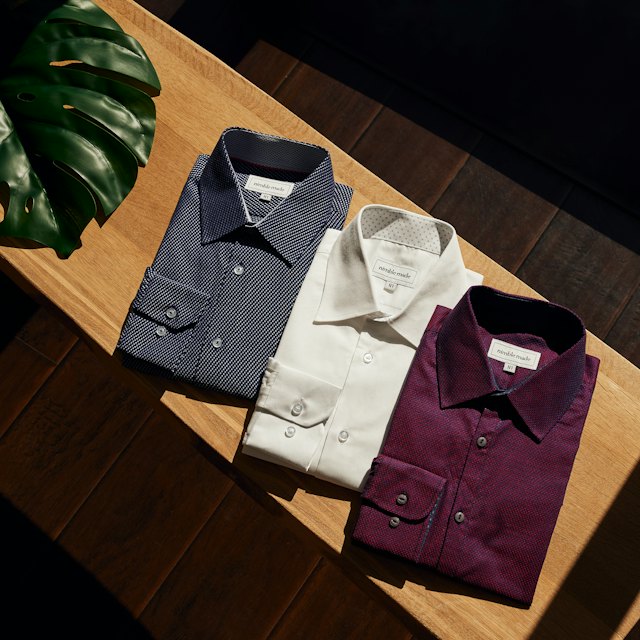
Why are men's clothing prices rising with inflation?
Men's clothing: +2.8% in the 12 months to September 2026 (U.S. Consumer Price Index), versus +3.7% for prices overall. 1-month +1.7%, 3-month +2.3%, 5-year +13.7%.
Inflation check: Rising with inflation. +2.8% in a year, versus +3.7% for prices overall.
The short answer
- Data from the Office of Textiles and Apparel and the U.S. International Trade Commission showed calculated duty burdens rising sharply across cotton and synthetic apparel imports, lifting landed border costs for imported garments. [1] [2]
- Houthi maritime attacks in the Red Sea forced container vessels to bypass the Suez Canal and sail around the Cape of Good Hope, keeping ocean container spot rates elevated and extending supply lead times according to Freightos Baltic Index data. [3]
- Major apparel-exporting countries raised statutory minimum wage floors, including a 56% minimum wage hike for garment workers in Bangladesh taking effect in December 2023 and upward wage adjustments across Southeast Asian assembly hubs. [3]
What's driving the price
Political, regulatory and trade factors
- Escalating apparel import tariffs (Jan 2025 to Sep 2026), Office of Textiles and Apparel: Data from the Office of Textiles and Apparel and the U.S. International Trade Commission showed calculated duty burdens rising sharply across cotton and synthetic apparel imports, lifting landed border costs for imported garments. [pushed prices up] [1] [2]
- Forced labor compliance and supply chain audits (Dec 2023 to Sep 2026), U.S. Customs and Border Protection: U.S. Customs and Border Protection expanded its enforcement under the Uyghur Forced Labor Prevention Act, requiring full farm-to-factory cotton traceability dossiers and detaining noncompliant apparel shipments, which added compliance costs and supply delays. [pushed prices up] [4] [5]
Macro factors: supply, weather, disease, energy
- Maritime shipping rerouting and elevated ocean freight (Dec 2023 to Sep 2026): Houthi maritime attacks in the Red Sea forced container vessels to bypass the Suez Canal and sail around the Cape of Good Hope, keeping ocean container spot rates elevated and extending supply lead times according to Freightos Baltic Index data. [pushed prices up] [3]
- Overseas factory wage hikes in manufacturing hubs (Dec 2023 to Sep 2026): Major apparel-exporting countries raised statutory minimum wage floors, including a 56% minimum wage hike for garment workers in Bangladesh taking effect in December 2023 and upward wage adjustments across Southeast Asian assembly hubs. [pushed prices up] [3]
- Raw cotton price stabilization (Jan 2024 to Sep 2026): World raw cotton prices trended downward and leveled off following pandemic-era highs, muting input costs for cotton fabrics and offsetting moderate cost increases in petroleum-based man-made synthetic fibers. [pushed prices down] [2] [7]
Retail, brand and seasonal factors
- Discretionary spending pullbacks and retail discounting (Oct 2024 to Sep 2026): Consumer survey data from Empower and retail indicators showed shoppers cutting back on discretionary apparel purchases and trading down to lower-priced items, forcing clothing retailers to rely on markdowns that limited 12-month price growth to 2.8%. [pushed prices down] [6]
Supply chain right now
- Raw fiber and fabric production (stable): Global raw cotton prices have stabilized near multi-year lows, checking raw yarn and fabric costs despite energy-driven cost pressures on synthetic fibers. [2]
- Overseas garment assembly (moderate): Manufacturing hubs across South and Southeast Asia are absorbing higher statutory wages while brands navigate supplier diversification away from China. [1] [3]
- Ocean shipping and border entry (critical): Extended maritime transit times around Africa combine with higher effective tariff rates and stringent customs documentation checks to keep landed freight costs elevated. [1] [3] [5]
- Retail distribution and sales (moderate): Store chains and online merchants face elevated domestic logistics and labor costs while using promotional markdowns to stimulate price-sensitive consumer demand. [6]
Researched 2026-10-18 with Google Search. Every point links to its sources; unsourced claims were removed.
Men's clothing prices, last 12 months
| Month | Change from a year earlier |
|---|---|
| September 2026 | +2.8% |
| August 2026 | +3.7% |
| July 2026 | +3.5% |
| June 2026 | +2.2% |
| May 2026 | +2.5% |
| April 2026 | +1.5% |
| March 2026 | +0.9% |
| February 2026 | +1.2% |
| January 2026 | +0.8% |
| December 2025 | +0.5% |
| November 2025 | +0.4% |
| September 2025 | +2.5% |
| August 2025 | +1.6% |
Source: U.S. Bureau of Labor Statistics, Consumer Price Index (CPI-U), series CUUR0000SEAA.
Sources
- depts.ttu.edu (depts.ttu.edu)
- Tariffs Impact U.S. Apparel Sourcing and Trade Beyond Just Price (updated March 2026) (shenglufashion.com)
- oneaimapparel.com (oneaimapparel.com)
- cbp.gov (cbp.gov)
- UFLPA Compliance for Apparel Brands: What CBP Requires (yarnstick.com)
- As apparel prices heat up, spending cools 22% (empower.com)
- lifestylemonitor.cottoninc.com (lifestylemonitor.cottoninc.com)
More in Personal & Pets
- Why are pet food prices rising slower than inflation?
- Why are vet bills rising with inflation?
- Why are pet grooming and boarding prices rising with inflation?
- Why are haircut prices rising with inflation?
- Why are toiletry prices rising with inflation?
- Why are women's clothing prices rising slower than inflation?